Explained
Chatbot or AI agent: what's the difference and which one a business needs

An agent does the work.
"We need a chatbot." Half of all conversations about automation start with this line. But once you find out what the person actually wants, it turns out they need clients to get answers at night, bookings to land in the system, and the manager to stop retyping the same thing across three windows. A chatbot from a no-code builder does this badly. And then comes disappointment in automation as a whole.
Let's skip the marketing and look at how these things really differ, where a scripted bot works great, where it breaks, and how to tell what you need.
What a chatbot is
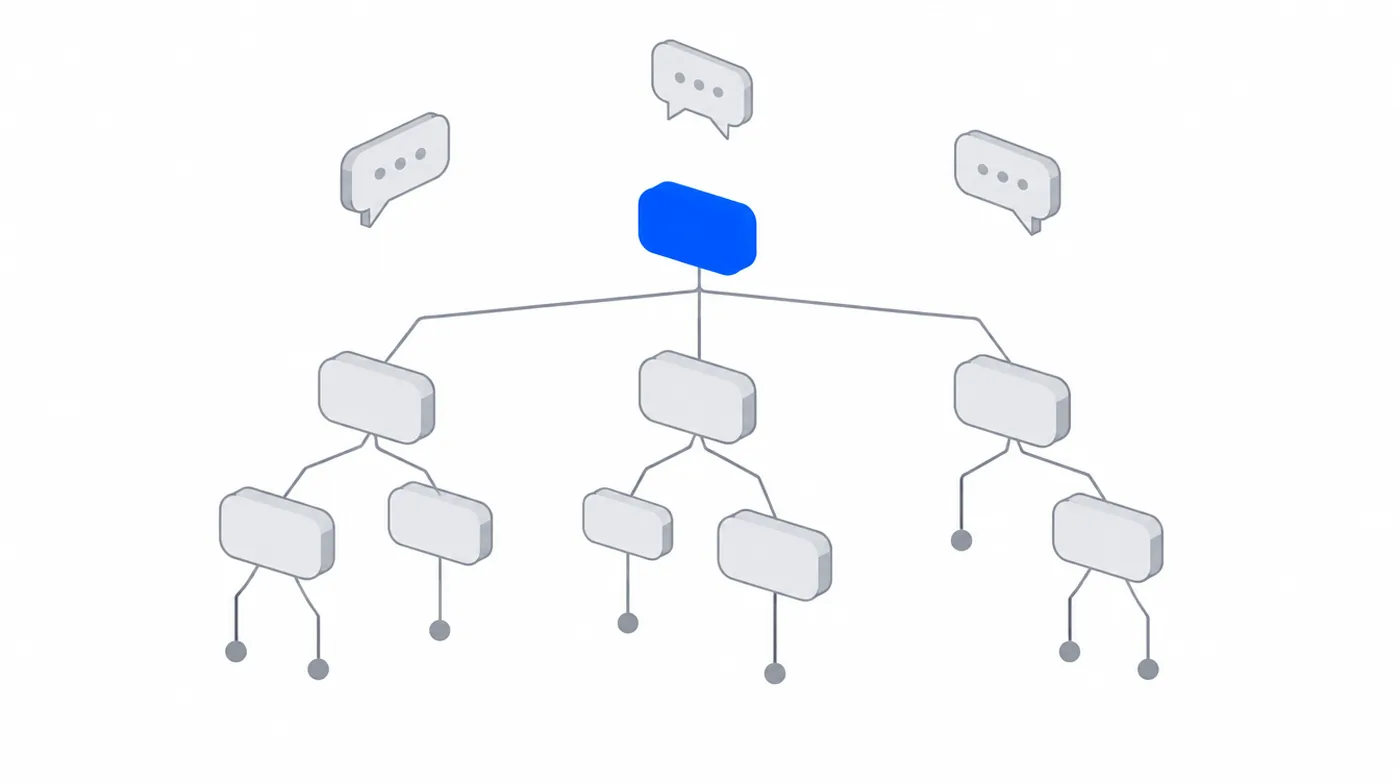
A classic chatbot is a tree of scripts. Someone wrote it all out in advance: if a person taps "Book", show the list of services; if they pick a service, show available dates; if they pick a date, ask for a name and phone number.
A bot like this doesn't understand language. It matches taps and keywords to a branch of the script. That's why it's predictable, cheap and handles simple repetitive tasks very well: show a menu, take a three-field request, give the address and opening hours.
Where a scripted bot breaks
The trouble starts when a client writes in their own words. Here are real messages that trip up a script:
- "Can I see the same stylist as last time, just not on Wednesday?"
- "We ordered 200 books two weeks ago, what's happening with them?"
- "Hi, how much would it be, roughly like last time but more?"
None of them fits a button. The bot replies "Sorry, I didn't understand you" or offers the main menu, and the person goes to a live manager. If the manager is busy, the person leaves for good.
The second place a script breaks is change. Prices change, a service is added, a stylist leaves. The tree has to be redrawn. The bot has no way to find out the truth on its own. It only knows what someone typed into it by hand.
What an AI agent is
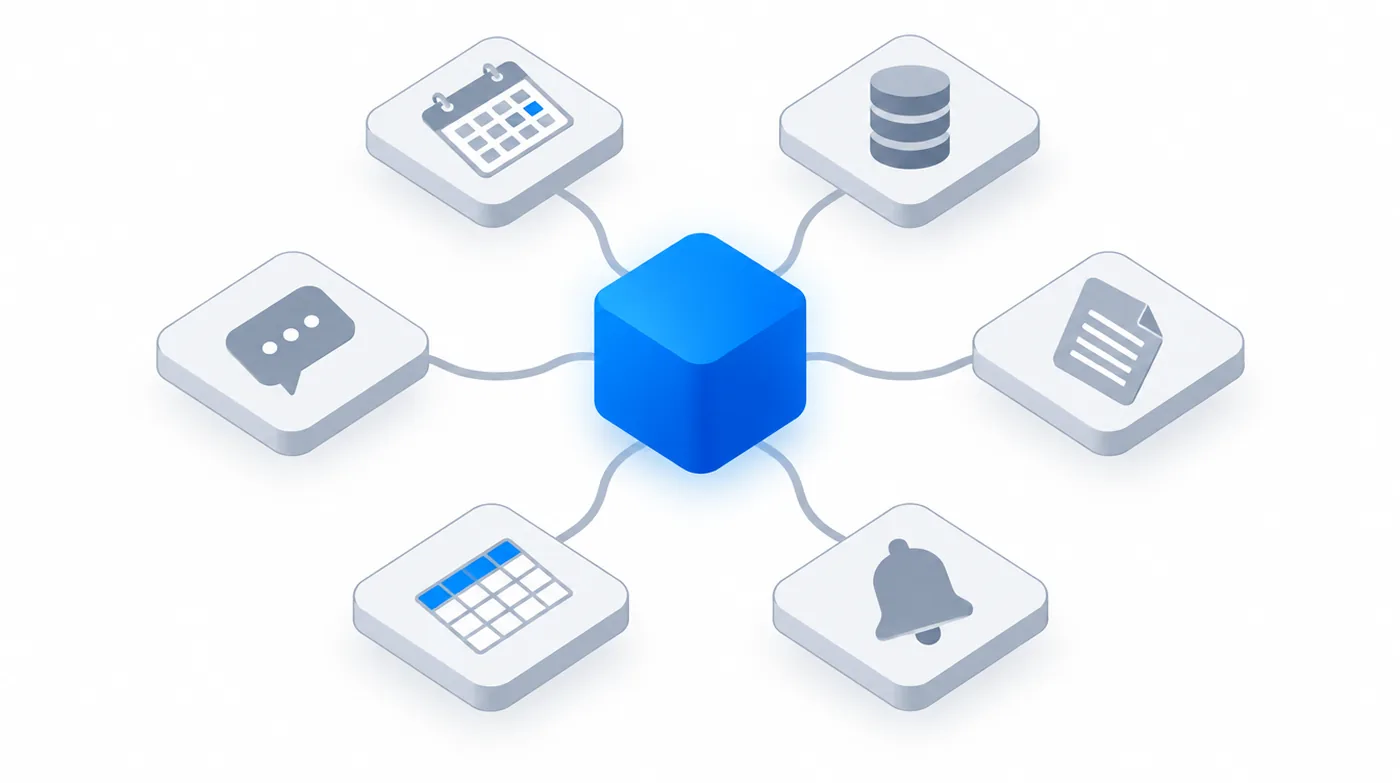
An AI agent works differently. It has no tree of buttons. It has three things:
- Understanding the request. A language model reads the whole message: what the person wants, which service, when, under what conditions.
- Access to systems. The agent is connected to the schedule, the CRM, the knowledge base, the warehouse, and looks there instead of at pre-written text.
- Permission to act. It doesn't just answer, it does things: creates a booking, sets a task, changes an order status, sends a reminder.
The difference in one line: a bot answers a question, an agent closes a task. The client doesn't need an answer. They need to be booked.
Five real differences
| Chatbot | AI agent | |
|---|---|---|
| How it understands | By buttons and keywords | By the meaning of the message, including typos, voice notes and "like last time" |
| Where it gets data | From whatever was typed into it by hand | From your systems: schedule, CRM, price list, knowledge base |
| What it can do | Show information and collect a request | Get things done: book, reschedule, set a task, build a report |
| Unusual question | "Didn't understand, please choose from the menu" | Answers from the knowledge base, and if unsure, hands over to a person with context |
| How it's set up | You draw script branches in a builder | You describe in words what it should do |
The last row shows the difference best. A bot has to be redrawn every time conditions change. With an agent, you just tell it.
When a bot is enough
You don't always need an agent. A scripted bot is enough if:
- there are few tasks and they don't change: show the menu, opening hours, address;
- a request fits into three or four fields and doesn't need checking;
- there aren't many requests, and a manager can easily handle the rest by hand;
- there are no systems to connect to, everything already lives in the chat.
In these cases a bot is cheaper and does the job. Honestly.
When you need an agent
Signs that a script won't save you anymore:
- clients write through several channels, and some messages get lost;
- more than half of the questions repeat, but each time in different words;
- answering means checking a system: schedule, order status, stock;
- an employee works as an adapter between the messenger and the CRM;
- conditions change often, and nobody has time to redraw the tree.
If three or more of these sound familiar, a scripted bot will give temporary relief, and in a month you'll be back where you started.
We'll go through a month of your requests and show what share an agent would close and what would still stay with people. Free of charge.

What it costs
Rough figures, to give you a reference point.
Scripted bot
A no-code builder costs from a few hundred rubles a month, and you can put one together yourself in an evening. A custom build usually starts at a thousand rubles one-off, plus maintenance. The main expense later on is reworking the script.
AI agent
Priced by volume: how many processes, how many requests, which systems we connect to. The platform plus the cost of handling messages. The point isn't the subscription price, it's the comparison: how many hours a month go into messaging now and how many of them will go away.
A reference point from our case: at Fabrika Fotoknigi, the task "contact the client" was created by hand 7,490 times. Even at three minutes per task, that's more than three hundred hours of work.
How to choose in fifteen minutes
Open your client messages for the past week and count three numbers:
- How many requests in total. Fewer than fifty a week, and most likely a bot will do, or you don't need anything at all.
- What share are repeat questions. More than half, and there's something to automate.
- How many answers required looking something up in a system. If many, a script won't help. You need access to data.
The same three numbers will come in handy later to see whether the rollout worked. More on this kind of counting in "Where to start with automation".
Questions and answers
How is an AI agent different from a chatbot?
A bot follows a pre-written script: button, then answer. An agent understands a question written in plain words, decides what to do and takes action in your work system.
Can a regular chatbot be enough?
Yes, if the task is simple and doesn't change. The more ways a question can be asked and the more often conditions change, the sooner a script stops coping.
Will an agent replace the front desk?
It takes over the routine: messaging, booking, reminders, repeat questions. Conflicts, discounts and unusual cases stay with people. At Fabrika Fotoknigi, 52% of requests were closed without a manager.
How long does launch take?
The first process usually takes one to two weeks: connecting channels, building the knowledge base, testing on real requests. The rest are added faster.
What if the agent gives a wrong answer?
That's what boundaries are for: topics it handles on its own, and topics it hands over to a person right away. At the start, there's usually a mode where an employee sees replies before they're sent, and it's switched off once trust has built up.
If you'd like to see how this works with your processes, we'll review them for free: count your requests, show what will be closed and give you a timeline.