Sales
Leads without ads or waiting: how Potok works and who needs it

Most sales teams look the same: the managers are ready to call, but there's no one to call. The ads are running, the budget is being spent, inquiries trickle in, and half of them are "just looking". My team and I went through this on our own projects and with Mary's clients, so when Potok came along, we took a close look at it. It isn't another ad account. It's a batch of new contacts that arrives right after you order. Below is how it works and who should try it.
Why regular lead generation wears you out
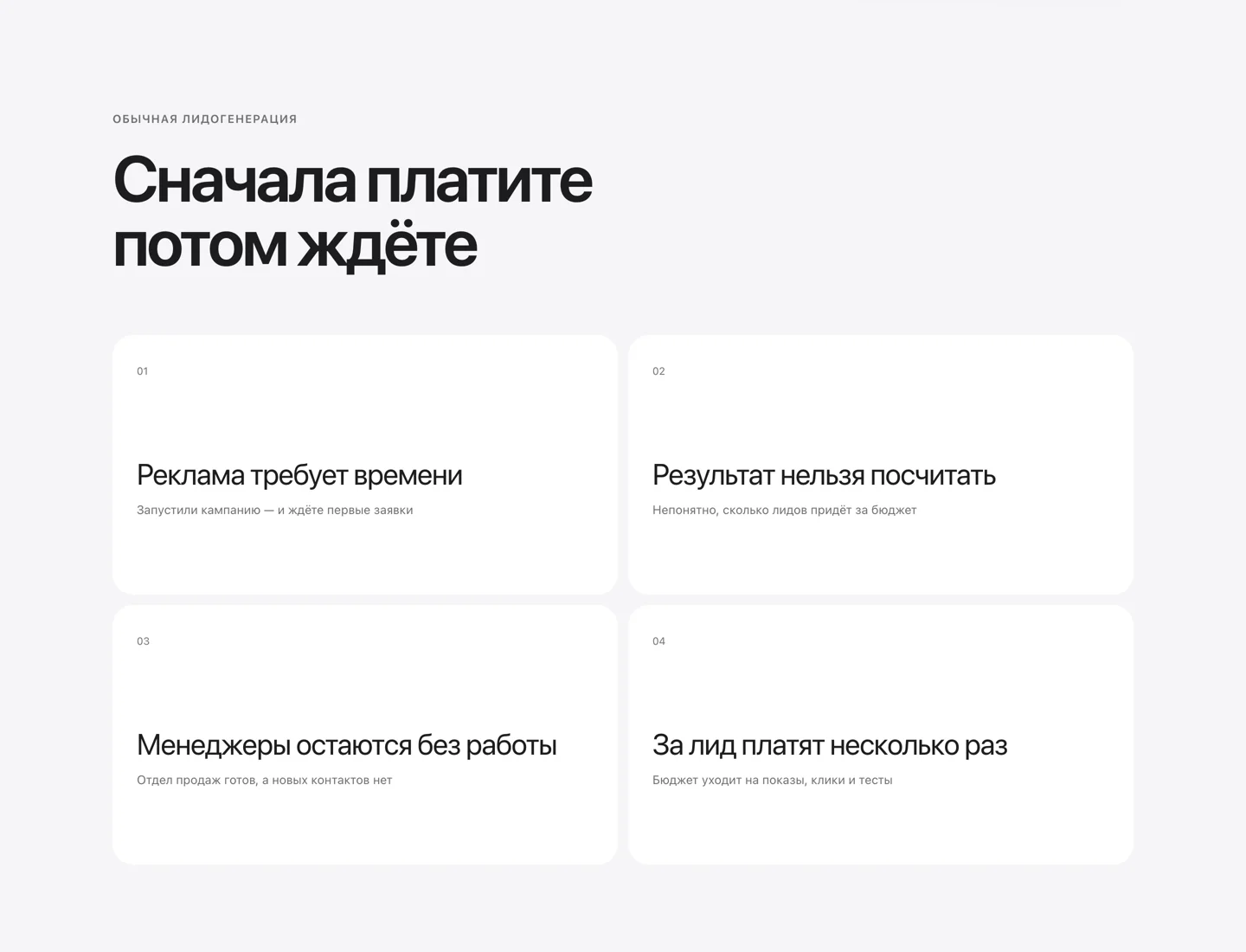
The classic "pay first, then wait" model breaks in four places.
- Ads take time. You launch a campaign and wait for the first inquiries. A week, two. All that time the sales team has nothing to do.
- You can't calculate the result in advance. How many leads the budget will bring is unclear until the very end. Planning the managers' workload is impossible.
- You pay for a lead several times over. Impressions, clicks, testing hypotheses, reworking creatives. Each inquiry costs more than the report suggests.
- Managers are left without work. The most expensive part of a sales team, the people, sits idle while marketing "ramps up".
A sales team shouldn't have to wait for marketing. It needs contacts today, and a clear idea of how many there will be tomorrow.
What Potok is
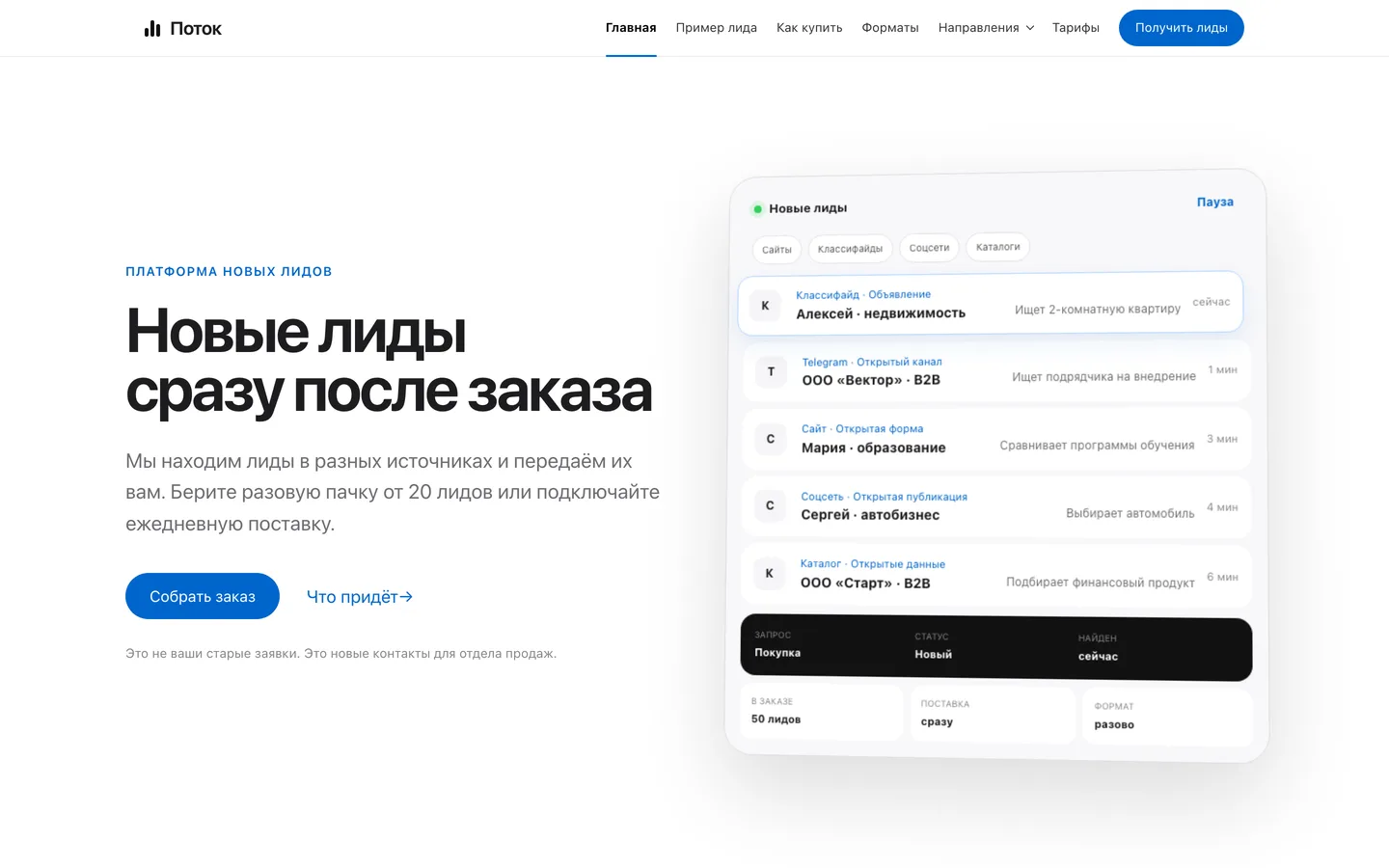
A platform for new leads. The service finds people and companies who are looking right now for what you sell, in open sources, and hands you a ready batch of contacts. One-off, from 20 leads, or as a daily delivery.
The key difference from ads: you don't pay for impressions and waiting. Before you pay you know everything: the niche, the quantity, the format and the price per lead. After payment the first batch arrives right away.
What's inside one lead
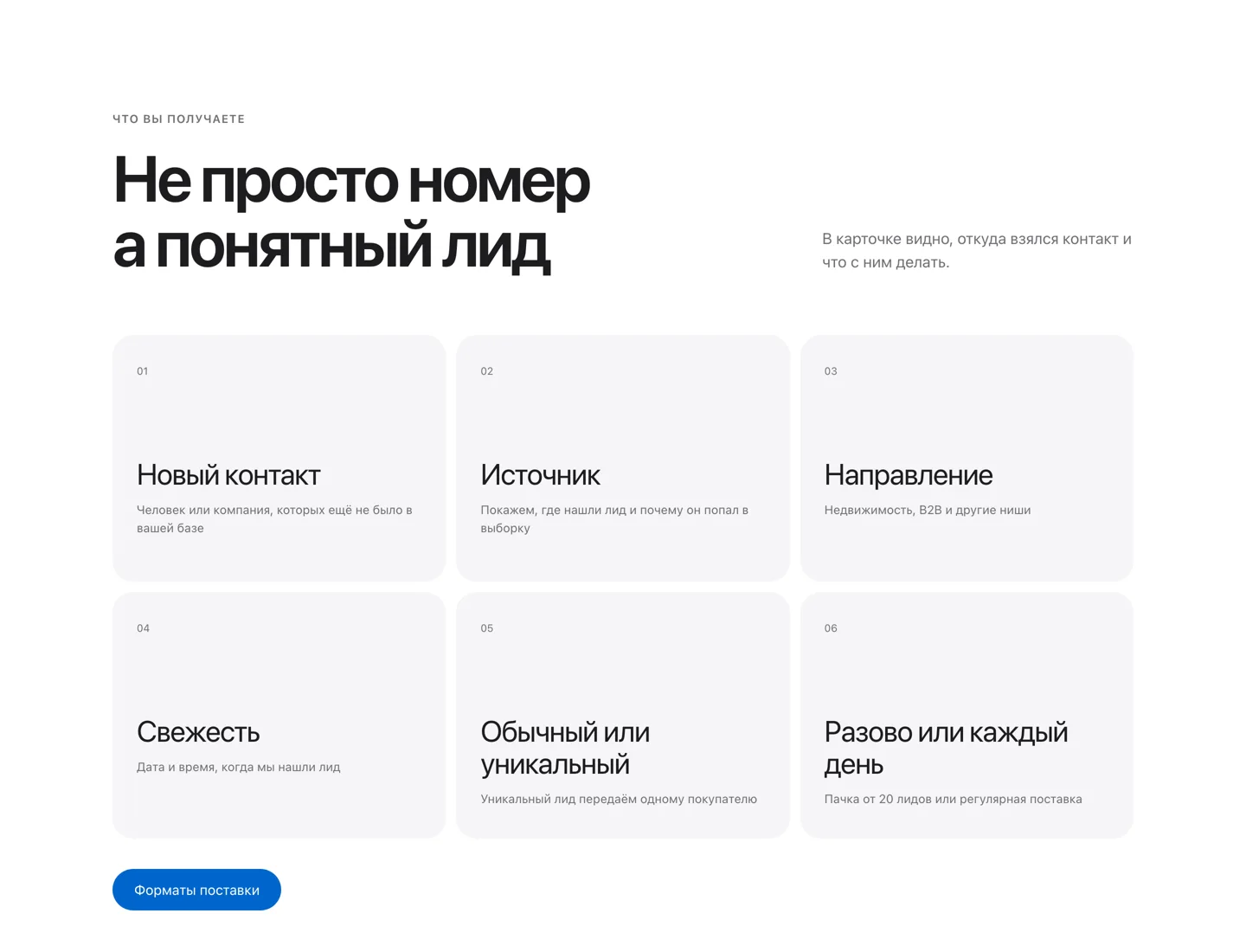
It's more than a phone number. The card shows where the contact came from and what to do with it.
- New contact. A person or company that wasn't in your database yet.
- Source. Where the lead was found and why it made the list, so the manager knows the context before calling.
- Niche. Real estate, B2B, auto, education, finance, e-commerce.
- Freshness. The date and time the lead was found. A contact found a minute ago and a contact from two weeks ago are different things.
- Regular or exclusive. An exclusive lead goes to only one buyer.
- One-off or daily. A batch of 20+ or a regular delivery.
Where the contacts come from
Open sources: classifieds, websites and public forms, social networks and messengers, directories and open data, ad platforms. The service catches new demand, the moment when a person publicly says what they're looking for: "looking for a 2-bedroom apartment", "need a contractor for implementation", "comparing training programs".
Every card shows the source and the reason the contact made the list. This matters: the manager isn't cold-calling someone from a purchased database, but calling a person who stated the need themselves.
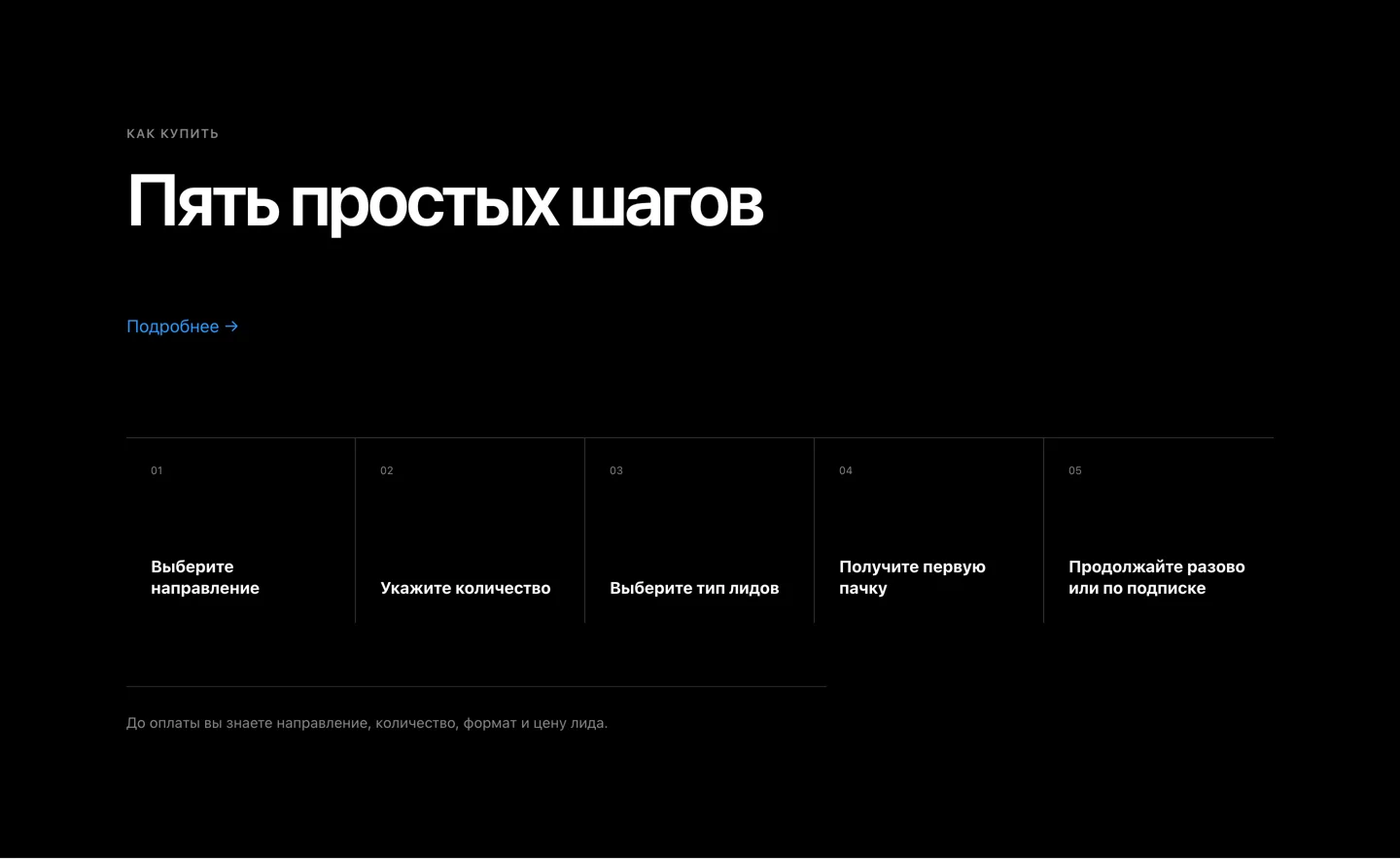
How to buy: five steps
- Choose a niche.
- Set the quantity: from 20 to 1,000 in a one-off batch, up to 20,000 on a subscription.
- Choose the lead type: regular or exclusive, any sources or specific ones.
- Get your first batch right after payment.
- Keep buying one-off or switch on daily delivery.
How much it costs
The price depends on the niche and is calculated on the website before you pay. The calculator shows the cost of the batch right away. Rough prices per lead:
- Education: from 180 ₽
- Services and B2B: from 190 ₽
- E-commerce: from 210 ₽
- Auto: from 240 ₽
- Real estate: from 290 ₽
- Financial products: from 330 ₽
Exclusive leads cost ×1.7 the base price, and only you get the contact. For comparison: the average cost of an inquiry from ads in the same niches is 500 to 3,000 ₽, and that's not counting the marketer's work and the time it takes a campaign to ramp up.
Niche, quantity, type, and you see the price right away. The first batch arrives after payment.

Who it's for
- A sales team with idle managers. You have the people, but no contacts. A batch of 100 leads keeps two managers busy for a week.
- A business testing a new niche or region. No need to build a campaign. Take 20–50 leads and see how the niche responds.
- Anyone tired of unpredictable ads. You know the quantity and the price before you pay, so you can plan workload and budget.
- Agencies and B2B services, where one client pays for the whole batch.
Who it's not for: if you have no one to work the contacts. A lead you reach three days later isn't a lead anymore. More on that in the next section.
Where Mary comes in
A batch of leads answers "who to call", but raises the next question: who calls, and when. A hundred contacts found today need to be handled today. Otherwise someone else will get to them.
This is where our part starts. Mary takes the batch, messages each contact in the channel that suits them, whether that's Telegram, WhatsApp or email, asks follow-up questions, filters out those for whom it isn't relevant, and passes only the warm ones to a manager, with the chat history and a clear next step. The manager doesn't call down a list. They call people who have already replied.
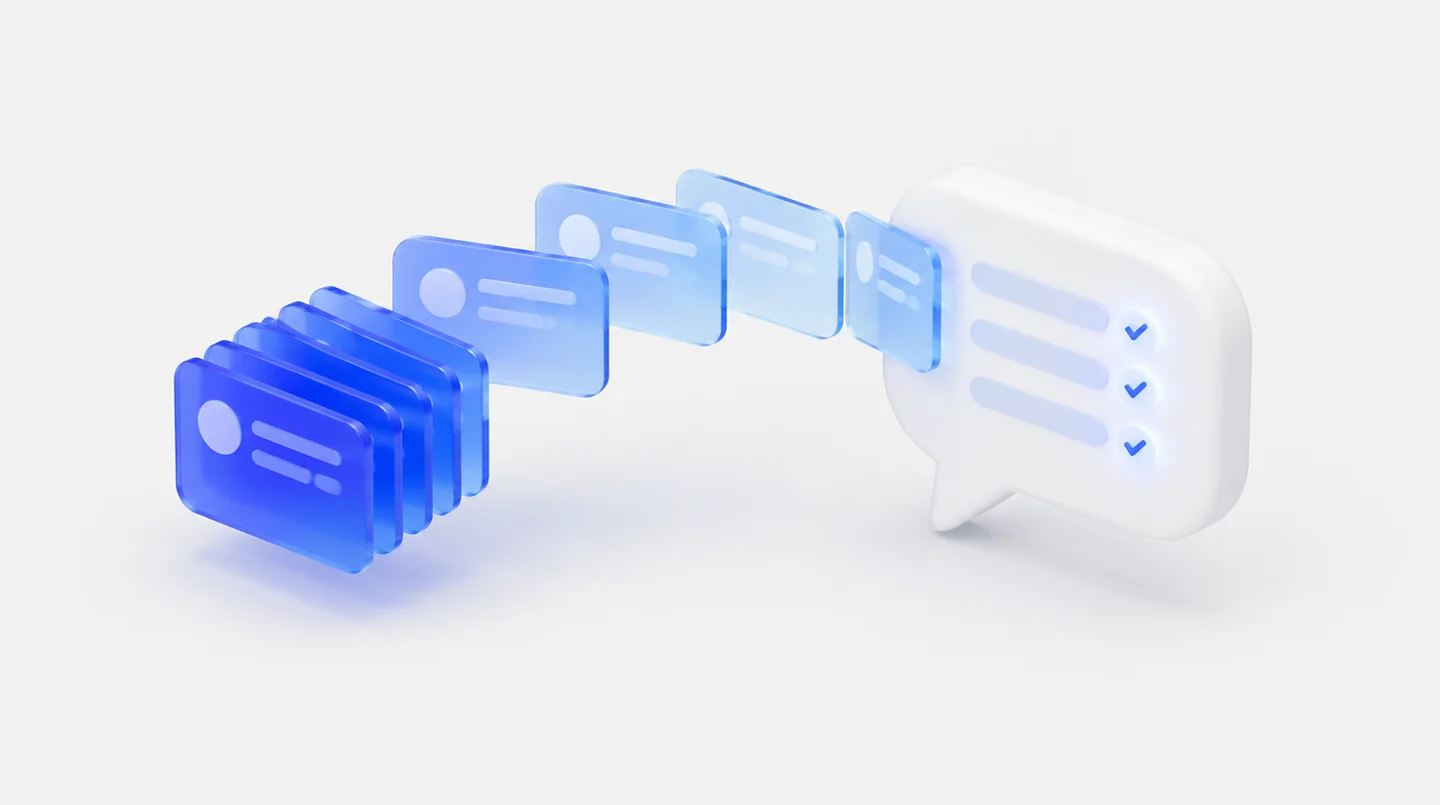
Potok and Mary together work like a conveyor: new contacts every day, first contact without a person, and a live conversation only where it's needed.
Questions and answers
Is this a purchased database?
No. These are contacts of people and companies who publicly stated their demand themselves, in a listing, a post or a public form. Each one has a source and a date.
What if the leads don't fit?
Start with the minimum batch of 20 leads. It costs less than a day of ads and shows how the niche responds before you put serious money in.
How is an exclusive lead different from a regular one?
A regular contact can go to several buyers, and you compete for it. An exclusive one goes only to you. It costs 1.7 times more, but converts better.
How fast does a batch arrive?
Right after payment. Daily delivery comes every day at an agreed time.
Can the follow-up be automated?
Yes. Mary connects to any source of contacts, Potok included. Write to us, we'll go through your process and show you what it would look like.